
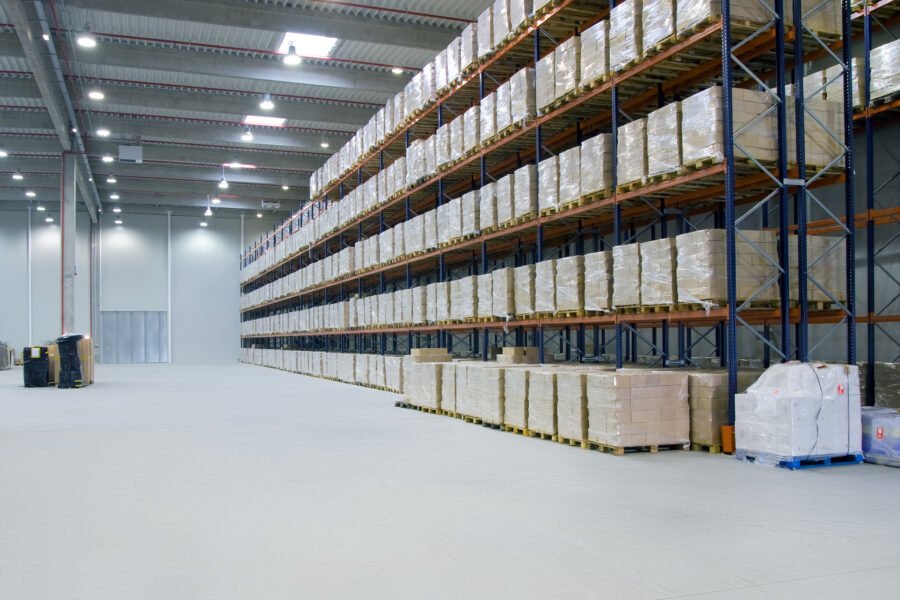
Cold Storage Facilities: Uninterrupted Cold Chain Solutions from Food Safety to Logistics
Preserving the freshness, nutritional value, and quality of food products from the point of harvest or production until they reach the consumer is possible through uninterrupted cold chain management. One of the most critical links in this chain is undoubtedly cold storage facilities. As an indispensable part of the agriculture and food sector, these facilities enable seasonal products to be utilized throughout the year, while also having strategic importance in terms of food safety and preventing waste.
Basic Functions and Importance of Cold Storage Facilities
A cold storage facility is a specialized facility designed for storing various products, especially food items, within specific temperature limits and relative humidity. The main purpose of these facilities is to extend the shelf life of perishable products, slow down microbiological activities, and preserve product quality. Particularly, fruits and vegetables continue their respiration after harvest. Reducing this respiration rate slows down the ripening process of the product, allowing it to last longer. For example, an apple kept at 25°C may have a storage life 6-20 days shorter than one stored in a cold storage facility.
The advantages provided by cold storage facilities are not limited to product quality:
- Supply Security: Enables products to be stored during periods of abundance and released to the market during periods of scarcity.
- Prevention of Waste: Minimizes post-harvest losses, providing significant economic savings.
- Geographical Flexibility: Allows products to be safely transported from one place to another and delivered to different markets.
Critical Factors in Cold Storage Design and Project Planning
A successful cold storage project requires an approach that accurately analyzes the investor’s needs, prioritizes product-based requirements, and targets energy efficiency. The basic elements to consider during the project planning stage are:
1- Product-Based Design: The type of product to be stored (fruit, vegetable, meat, dairy products, frozen food, etc.) determines all technical characteristics of the facility. Each product group has its own specific temperature and humidity requirements.
- Meat and poultry: Temperature between 0 and 1.7°C and 95% humidity
- Fish and seafood: Temperature between 0 and 4°C and 85% humidity
- Dairy products: Temperature between 0 and 4°C and 80% humidity
- Fruits: Temperature between 0 and 10°C and 85% humidity (varies by type)
- Vegetables: Temperature between 0 and 8°C and 90% humidity (varies by type)
- Frozen products: -18°C or lower temperature
2- Capacity and Sizing: The amount of product to be stored (in tons) and the physical area where the facility will be established directly affect the storage dimensions. Projects can be developed at different scales, from small modular rooms of 10 m² to large facilities of thousands of square meters.
3- Climatic Conditions: The external air temperature, humidity level, and sun exposure of the region where the facility will be established play a determining role in heat insulation and cooling load calculations.
4- Insulation and Cooling System: The point where energy efficiency is highest is the selection of the right insulation material (usually polyurethane panels) and determination of an appropriately sized cooling unit (monoblock, split type, etc.).
Factors Affecting Cold Storage Cost
Cold storage cost is one of the most researched topics by investors. However, since this cost depends on many variables, it is not possible to give a standard price. The main items affecting cost are:
- Construction and Insulation: Panel quality and thickness used, storage door, floor insulation
- Cooling System: Brand, capacity, technology (whether inverter or not), and number of cooling motors
- Mechanical and Electrical Installation: Cables, panels, lighting systems used (LED preference)
- Automation and Control Systems: Temperature and humidity control devices, alarm systems, data loggers
- Additional Equipment: Rack systems, pallets, pre-cooling or blast freezing units if any
For current and precise costs, on-site inspection and needs analysis by your company’s expert engineers is essential.
Cold Storage Technologies: Controlled Atmosphere and Blast Freezing
Today, advanced technologies that go beyond standard cold storage are revolutionizing product quality preservation.
Controlled Atmosphere (CA) Storages: These storages precisely control not only temperature and humidity but also the ratios of oxygen (O₂), carbon dioxide (CO₂), and nitrogen (N₂) gases inside the storage. In this way, the respiration rate of products and ethylene gas production are minimized. They are ideal especially for products requiring long-term storage such as apples, pears, and kiwis. CA storages are also specifically encouraged within the scope of TKDK IPARD supports.
Blast Freezing Rooms: Especially in the meat, fish, and prepared food sectors, products need to be frozen very quickly to preserve their quality. Blast freezing rooms rapidly reach very low temperatures such as -30°C to -40°C, preventing the formation of large ice crystals in the product’s cell structure. Thus, when the product is thawed, it is indistinguishable from fresh product.
Cold Storage Investment Incentives and Grants
Cold storage investments are significantly supported in our country through IPARD and KKYDP programs implemented by the Agriculture and Rural Development Support Institution (TKDK) and Investment Incentive Certificates provided by the Ministry of Industry and Technology.
1. IPARD (TKDK) Supports:
Cold storage investments for the processing and marketing of agricultural products, in particular, can benefit from IPARD grants. Within the scope of this program:
- Grant support is provided for machinery-equipment and construction works.
- Construction of pre-cooling units, modified atmosphere storages, and packaging units is supported.
- Applicant businesses are expected to be small or medium-sized and comply with relevant legislation, especially Food Law No. 5996.
2. Investment Incentive Certificates:
Cold storage investments with a minimum enclosed area of 500 m² can apply for an Investment Incentive Certificate to benefit from regional incentives. Advantages provided by this certificate include:
- VAT Exemption and Customs Duty Exemption
- Tax Reduction: Investment contribution rate can vary from 15% to 50% depending on the region where the investment is made
- SGK Premium Support: Employer insurance premium support is provided for periods ranging from 2 to 10 years
- Interest/Profit Share Support
- Investment Site Allocation
Important note: If the cold storage is being built as part of another main investment such as a fruit juice facility or slaughterhouse, then the minimum 500 m² area requirement is not sought, and it benefits from the main investment’s incentives.