
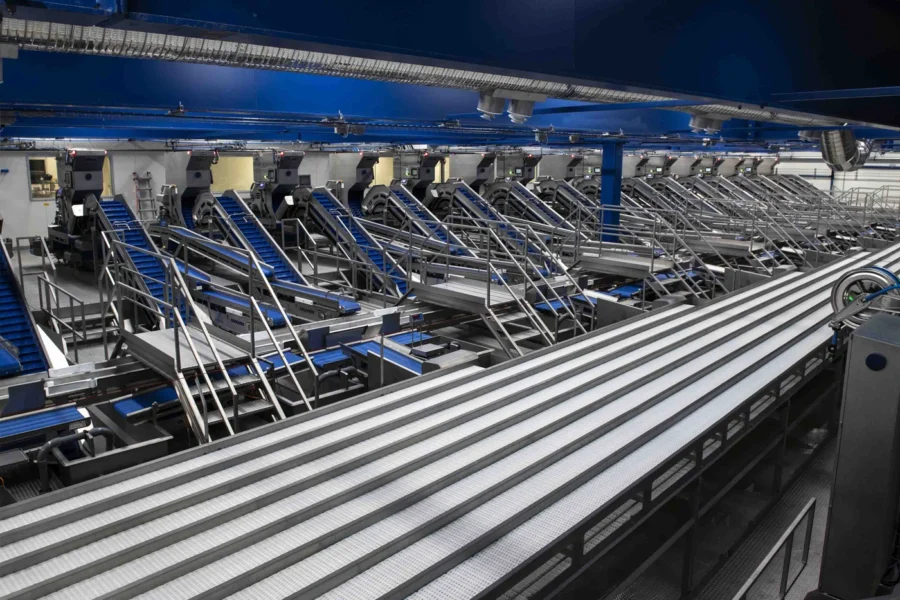
Engineering Solutions in Food and Non-Food Production Facilities: Turnkey Projects and Sustainable Investment
The food sector has a constantly growing and renewing structure with the increasing population and changing consumer habits. Gaining competitive advantage in this dynamic sector is possible not only with quality raw materials and production processes, but also with efficient, hygienic, and modular facility infrastructure. Engineering solutions for food and non-food production facilities require a holistic approach covering all steps from the feasibility stage to the commissioning process of an investment.
Project Planning Process in Food Production Facilities
The establishment of a modern food production facility is the product of an interdisciplinary effort. The process begins with the investor’s needs analysis and determination of the product portfolio. At this stage, feasibility studies come into play. Parameters such as investment payback period, capacity utilization rate, raw material supply conditions, and market analysis are examined in detail. Particularly, the preparation of a capacity report is critical for the facility to operate efficiently throughout its economic life.
During the project planning stage, every detail from facility site selection to building design, from mechanical infrastructure to electrical automation systems is addressed. BSH (Building, Sanitation, Hygiene) compliance projects, which are among the most important issues in terms of food safety, ensure that the facility is constructed according to hygienic design principles. These principles cover a wide spectrum from workflow diagrams that prevent cross-contamination to easily cleanable surface materials.
Food Safety and Quality Standards in Engineering Solutions
To compete in international markets and gain consumer trust in the domestic market, facilities must comply with certain quality and safety standards. At this point, food safety consultancy services come into play. Facility projects are shaped according to ISO 22000 Food Safety Management System and HACCP (Hazard Analysis and Critical Control Points) principles.
In HACCP-compliant facilities, potential hazards are analyzed at every stage of the production line and critical control points are determined. For example, equipment such as pasteurization units, metal detectors, foreign material removal systems are designed according to the requirements of these control points. Additionally, areas designed for personnel hygiene such as entrance units, hand washing and disinfection stations, changing rooms are integral parts of the facility.
Non-Food Production Facilities and Process Engineering
Non-food production facilities cover different product groups such as chemicals, cosmetic products, cleaning materials, or industrial raw materials. The project planning of these facilities is specialized according to the chemical properties of the product, production process, and safety requirements. Process engineering comes into play at this point, ensuring that the production line is efficient, safe, and sustainable.
In chemical production facilities, special ventilation systems, emergency showers, and eyewash stations are designed considering factors such as explosion risk and toxic substance leaks. Additionally, waste management and environmental protection measures are among the priority issues in the design of these facilities.
Turnkey Projects and Commissioning Process
Turnkey food factory projects mean that the investor delegates all responsibility to an engineering firm. In this model, the project management company coordinates architectural design, static calculations, mechanical-electrical projects, construction, machinery installation, and commissioning processes.
The commissioning process is the most critical stage where the facility’s design on paper transforms into reality. At this stage, all equipment is tested, production lines are operated, personnel training is provided, and all necessary permits are obtained. Additionally, management of EIA (Environmental Impact Assessment) processes and obtaining necessary approvals from official institutions are important parts of this process.
Industrial kitchen projects, on the other hand, are a special area of expertise, especially for catering companies, hotels, hospitals, and mass consumption enterprises. In these projects, high-capacity cooking equipment, cold rooms, dishwashing units, and hygienic ventilation systems are designed as a whole.
Investment Incentives and Grants
Food and non-food production facility investments can benefit from various government supports and incentives in Turkey. Particularly within the scope of TKDK IPARD and KKYDP programs, significant grant supports are provided for facilities for the processing and marketing of agricultural products. To benefit from these supports, projects must be prepared in accordance with EU standards and application processes must be carried out completely.
Additionally, extra grant supports are provided for environmentally friendly projects such as renewable energy use, wastewater treatment systems, recycling, and circular economy investments. These supports significantly reduce investment costs and provide long-term savings in operating expenses.
Our company stands by you in all processes of your food and non-food production facility investments, from feasibility studies to project planning, construction and installation to commissioning. By establishing efficient and sustainable facilities compliant with international standards, we ensure that your investment pays back in the shortest possible time.